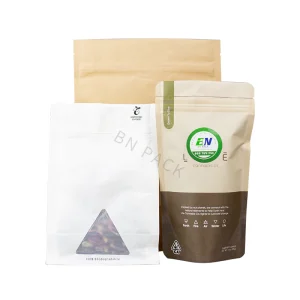
Personalized coffee packaging keeps roasted coffee fresh by controlling oxygen, moisture, light, CO₂ release, and repeated air exposure after opening. A 2001 storage study found that raising oxygen partial pressure from 0.5 to 21.3 kPa increased deterioration about 20-fold, while every 10°C temperature increase raised the deterioration rate by roughly 15–23%. Freshly roasted coffee also releases CO₂, with carbon dioxide accounting for more than 80% of gases formed during roasting. A suitable pouch therefore needs low oxygen transmission, dependable heat seals, light protection, a one-way valve when required, and a resealable closure sized for realistic consumption.
Roasted coffee starts changing immediately after roasting because hundreds of aroma compounds, oils, acids, and gases remain chemically active. Oxygen is especially damaging to roasted lipids and aroma compounds. In the 2001 shelf-life study, roasted and ground coffee was stored across oxygen pressures of 0.5–21.3 kPa, temperatures of 4–35°C, and water activities from 0.106 to 0.408; higher oxygen produced the largest change in deterioration rate. Package design therefore has to control the atmosphere around the coffee rather than simply prevent beans from spilling.
That atmosphere starts with the film itself. Flexible coffee pouches commonly use several functional layers because one polymer rarely provides printing quality, puncture resistance, sealing performance, moisture protection, and very low oxygen transmission at the same time. Aluminum foil, metallized films, EVOH-based structures, PET laminates, and selected high-barrier mono-material structures can all be used, but their performance should be compared through measured oxygen transmission rate and water-vapor transmission rate rather than film thickness alone.
A thicker pouch is not automatically a better oxygen barrier. Barrier material, layer construction, seal quality, storage humidity, and temperature determine how much oxygen eventually reaches the coffee.
The difference becomes easier to see when oxygen transmission is expressed numerically. A published 2003 packaging study evaluated metallized structures with oxygen transmission rates of 0.5, 2.9, and 5.5 cm³/m²/day at 25°C. Nitrogen-flushed packs containing about 2–3% residual headspace oxygen maintained acceptable roasted-and-ground coffee for at least 6 months, compared with approximately 3 months for packs without nitrogen flushing under the reported conditions.
Lower film permeability cannot compensate for a weak seal. Oxygen and water vapor can enter flexible packaging through the film surface or through imperfect seals, so fin-seal width, heat-sealing temperature, dwell time, pressure, contamination around the seal area, and zipper installation all matter. Even a high-barrier laminate can perform poorly when coffee particles, oil, folds, or uneven sealing surfaces create microscopic leakage paths.
The next issue is pressure inside the pouch. Roasting forms CO₂ through Maillard reactions, Strecker reactions, and pyrolysis, and CO₂ represents more than 80% of the gases generated during roasting. Part of that gas remains trapped inside the porous bean structure and leaves gradually after roasting, which is why freshly packed whole beans can make a sealed bag expand.
A one-way degassing valve gives that gas an exit while restricting outside air from moving back through the same opening. Valve choice should match roast level, fill weight, expected packing time after roasting, pouch headspace, and film structure. A 100 g coffee pack behaves differently from a 1 kg foodservice pouch because the amount of coffee producing CO₂ and the available headspace are different, so valve placement should be treated as a functional specification rather than an artwork preference.
Ground coffee needs tighter oxygen management for another reason: grinding exposes far more coffee surface to air. Fracturing each bean into hundreds or thousands of particles gives oxygen easier access to oils and volatile compounds, while aroma molecules have shorter paths to escape from the coffee matrix. Research on packaged coffee identifies volatile loss, oxidation, CO₂ release, and oil migration as major physical and chemical changes during storage.
Pack format can therefore be matched to how the product will actually be consumed:
-
100–250 g pouches suit samples, premium lots, and lower-frequency home use where faster turnover after opening is preferred.
-
250–500 g pouches suit regular home brewing and reduce the number of separate packages compared with very small formats.
-
1 kg packs are more appropriate for cafés, offices, restaurants, and other users capable of consuming the coffee quickly after opening.
-
Ground coffee sold for slower household use benefits from smaller fill sizes because every opening replaces part of the protected headspace with air containing about 21% oxygen.
Consumption rate shows why sizing matters. At 20 g per day, a 250 g pouch lasts about 12.5 days, while a 1 kg pouch lasts 50 days. If both are opened once every morning, the larger pack receives roughly four times as many fresh-air exchanges before it is empty. A zipper cannot recreate the low-oxygen condition used during commercial filling, but it can limit unnecessary airflow between servings.
Nitrogen flushing can reduce oxygen before the first opening. Normal atmospheric air contains about 21% oxygen at sea level, while modified-atmosphere packing replaces part of that air with gases such as nitrogen or carbon dioxide. FDA definitions describe modified-atmosphere packaging as intentionally changing the gas composition inside a package, including reducing oxygen or replacing it with another gas.
| Packaging variable | What should be measured | Why it matters |
|---|---|---|
| Oxygen barrier | OTR at stated temperature and RH | Slows oxidation during storage |
| Moisture barrier | WVTR at stated conditions | Limits moisture uptake |
| Headspace gas | Residual O₂ percentage | Shows how much oxygen remains after filling |
| Valve | Opening/closing performance | Releases CO₂ without providing an open vent |
| Heat seal | Seal strength and leak rate | Keeps film barrier performance relevant |
| Pack volume | Product-to-headspace ratio | Affects gas pressure and oxygen available inside |
Temperature still affects coffee even when the package is well designed. The 2001 study reported that a 10°C increase accelerated deterioration by approximately 15–23%. More recent work published in 2025 stored roasted Arabica at 30, 40, and 50°C and identified 82 volatile compounds; storage temperature and roast level significantly affected volatile profiles and shelf-life indicators at p < 0.05.
That temperature sensitivity matters during distribution. Coffee packed at a climate-controlled roastery may later sit in a warm fulfillment center, delivery vehicle, retail storeroom, or kitchen cabinet. Custom packaging cannot cool the coffee, but stronger oxygen and moisture barriers reduce additional exposure while the product passes through environments the roaster cannot control.
Light protection belongs in the same specification. Opaque printed structures, foil layers, and metallized barriers reduce light reaching roasted coffee, while a large transparent window exposes more product to the retail and storage environment. Full product visibility is rarely necessary when the package already communicates roast level, origin, tasting notes, roast date, net weight, brewing method, and bean or grind format.
Personalization also allows different coffees to use different protective configurations rather than forcing every SKU into one pouch. A fast-selling 250 g local roast may not require the same barrier target as a 500 g product entering longer retail distribution. A freshly packed whole-bean espresso roast may need a degassing valve, while another format packed after a longer resting period may produce less internal pressure.
Material selection can also address end-of-life requirements. Modern recyclable packaging pouches can use structures designed around recycling-compatible material families, but recyclability should not replace performance testing. A 2026 study comparing mono-material and multi-material packages examined roasted Arabica stability at 25, 40, and 50°C, showing that packaging configuration and temperature influenced oxidation measurements and predicted storage life.
For buyers, the useful specification is therefore numerical rather than descriptive. Ask the supplier for OTR and WVTR values together with the exact temperature and relative humidity used for testing; then define fill weight, zipper type, valve requirement, film thickness, seal width, printing method, expected distribution period, and storage range. “High barrier” without test conditions gives little basis for comparing two pouch structures.
Roasters can verify the finished package with filled-pouch checks rather than approving empty samples alone. A 250 g production sample can be inspected for seal contamination, zipper access, valve position, pouch expansion, pinholes, drop resistance, headspace oxygen, and dimensional fit on the filling line. When multiple lots are tested over 30, 60, 90, or 180 days, sensory results can be compared with oxygen, moisture, and package-integrity measurements instead of relying only on the printed best-before date.
The most useful personalization happens when graphic design follows those physical requirements. Roast date, batch code, storage instruction, brew ratio, origin, process, and grind information can then be printed without reducing seal area or placing artwork over the valve location. The package preserves coffee best when barrier film, valve, seal, headspace, fill size, and expected consumption period are specified together, because every opening, warm storage period, or leakage path changes the environment surrounding the roasted coffee.